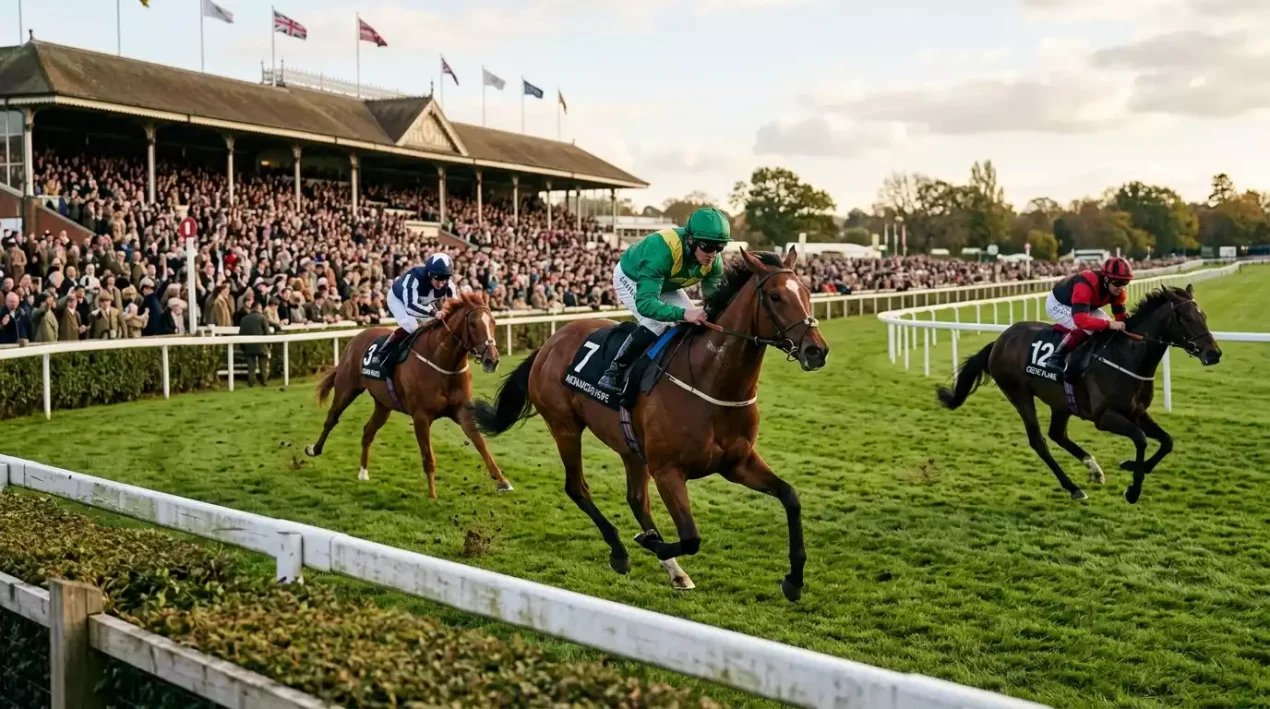
UK Horse Racing Betting Sites: Where Punters Back the Racing Post Card in 2026
Why horse racing keeps quietly defending its place in British betting
Horse racing is the strange survivor of British gambling. Football has more turnover, casino has more headline GGY, but racing is the vertical the regulator and the Treasury treat with kid gloves. When the Autumn Budget 2025 raised Remote Gaming Duty to 40% and introduced a new Remote Betting Duty at 25% from April 2027, racing kept the original 15% General Betting Duty rate. That carve-out is the clearest signal that British policy treats horse racing as a special case worth protecting.
Gambling Survey for Great Britain Wave 2 in 2025 puts the share of UK adults betting on horse racing in any four-week window at 4–7%, with seasonal swings around the major festivals — Cheltenham in March, the Grand National in April, Royal Ascot in June, the St Leger in September. The number sounds small until you remember it represents two to four million adults placing real bets on actual horses, with most of that activity flowing through online sportsbooks.

What racing’s share of UK betting actually looks like
Horse racing turnover sits inside the wider online betting figure, which generated £2.6 billion in gross gambling yield over the year to March 2025. Racing’s slice of that is somewhere between a quarter and a third depending on how the operator splits sports versus racing internally. The shape of the activity is heavily seasonal. The first week of Cheltenham concentrates a year’s worth of casual punter attention into seven afternoons. Royal Ascot does the same for flat racing. Outside those peak weeks, racing settles back to a regular daytime business of meetings up and down the country, mostly Tuesday through Saturday.
The participation data tells you something important: 16% of UK men bet on any sport in the past four weeks compared with 4% of women, but the male skew is sharper for racing than for football. The typical racing punter in Britain remains an older male, often someone who has bet on racing for decades, and the digital migration of that customer base has been slower and less complete than for other sports. A meaningful chunk of the UK racing market still places bets in betting shops or by phone in 2026.
What this means for online operators is that racing rewards depth over breadth. A casual football punter wants the Premier League table and an accumulator builder. A racing punter wants every meeting in Britain and Ireland, full cards, form, going reports, jockey changes, non-runners, withdrawals, and reduced odds where appropriate. The sportsbook that gets racing right is doing the unglamorous work that football tabs do not require.

Best Odds Guaranteed and how it actually settles
Best Odds Guaranteed is the racing-specific promotional tool that defines the competitive landscape. The promise is straightforward: bet at the price you take, and if the starting price (SP) is bigger when the race goes off, the operator pays you at SP instead. So a bet placed at 4/1 that drifts to 5/1 by the off settles as if you had taken 5/1.
The mechanic only really applies to early prices and ante-post markets. Once the race is at the post and SP is being formed, you cannot bet at a price separate from SP, so there is no comparison to make. BOG matters in the hours before a race, when professional and informed money is moving the market. A punter who likes to back early when they have done the form before the late steamers come in benefits substantially from BOG. A punter who only bets at the off, or who only ever takes SP, gets no value from it.
The operator’s cost is real. Paying out at the bigger of taken price or SP costs the operator the difference whenever the market drifts. The largest UK racing books absorb this cost as a marketing expense because BOG is now table stakes for any serious racing offer. Anyone running a racing book without BOG in 2026 is effectively conceding the punter to the books that do.
The settlement detail to watch is whether BOG applies to all UK and Irish meetings or only to a subset. Some operators carve out lower-grade Irish meetings or international fixtures from BOG, which makes the headline less generous than it appears. Read the BOG terms before assuming you are covered on the meeting you are about to bet on.

Tote and pool betting in the modern landscape
Pool betting is the historical alternative to fixed-odds betting. Instead of taking a price from the bookmaker, you contribute to a pool of stakes and the pool is divided among winners after a deduction. The Tote operates the major UK pools — Win, Place, Exacta, Trifecta, Placepot, Quadpot, Jackpot — and remains a significant route for racing-led punters even though the operator is now part of a larger group.
The structural advantage of pool betting is that it can produce dividends fixed-odds books cannot match. A 50/1 winner in a 24-runner handicap might pay £200 at SP fixed-odds; the Tote Exacta on the same race could pay £2,000 if the second was also long-priced. For punters who target the multi-leg pools — Placepot in particular — the dividends on a lucky day can dwarf anything a sportsbook will pay.

The downside is variance. Pool dividends are not known in advance and depend on who else bet what. A favourite-laden Placepot might dividend at £20 on a £1 unit when sportsbook accumulators on the same selections would have paid £80. The pool punter is making a bet on field composition as much as on horses. For racing regulars the Tote remains essential, but a casual punter is better served by fixed-odds with BOG.
Why racing kept the 15% duty when everything else rose
The Autumn Budget 2025 split the Remote Betting Duty into two strands from April 2027: racing stays at 15% under General Betting Duty, everything else goes to 25%. The political rationale is that the British racing industry depends on betting turnover for its prize money and economic viability through the Horserace Betting Levy, and a higher rate on racing would damage the industry beyond repair. The economic rationale is that racing’s GGY is small enough that the marginal Treasury revenue from raising the rate would be outweighed by the structural harm to the sport.
The split rate creates an interesting situation. Sportsbooks now have to apply different duty rates to different products inside the same account. A bet on a Cheltenham winner is taxed at 15% on the operator’s gross profit; a bet on a Premier League match is taxed at 25%. The accumulator question becomes complicated when a multiple combines a racing leg with a football leg. The industry has been quietly working through the settlement maths for two years and the answer involves apportioning the operator’s gross profit across the mixed-product wager.

The other consequence is that racing-led operators have a structural advantage from April 2027 onwards. A book that does most of its volume on horses pays the 15% rate on most of its GGY; a book that does most of its volume on football pays 25% on most of its. That difference flows directly to the prices and offers each operator can sustain. Whether this prompts visible product migration is one of the questions I am watching this year. The broader picture of how the tax changes ripple through is covered in the 2026 tax hike on UK online casinos.
How I would actually choose a UK racing book in 2026
The criteria for a strong UK racing site are unfashionable but specific. Coverage of every UK and Irish meeting, including the small grades. Early prices posted reliably the night before. Best Odds Guaranteed applied to UK and Irish racing without carve-outs. A non-runner-no-bet policy that is automatic rather than negotiable. Rule 4 deductions applied transparently with the reason stated. Reduced odds for withdrawn favourites communicated cleanly.

The flashier elements — sign-up bonuses, free bet offers, racing-specific cash-back — matter less than the core product. A racing punter who relies on the operator’s price feeds being accurate, the going reports being right, and the settlement being predictable will out-perform any bonus offer over a year. The best UK racing sites in 2026 are the ones that respect that priority. They are usually also the operators that have been in racing for the longest time, which is not coincidence.
Why is General Betting Duty held at 15% for horse racing under the 2026 reforms?
Racing’s economic viability depends on betting turnover via the Horserace Betting Levy, which funds prize money and the wider industry. The Autumn Budget 2025 explicitly carved out racing from the new 25% Remote Betting Duty to protect the sport’s revenue base, keeping the existing 15% General Betting Duty rate in place.
Which UK bookmaker covers the most international racing meetings?
The major UK racing books all carry UK and Irish racing in full. International coverage — French, US, Hong Kong, Australian, South African racing — varies meaningfully between operators, with the racing-led specialists offering deeper international cards than the multi-sport books. The choice depends on which international circuits you actually bet on.
How does Best Odds Guaranteed actually settle?
Settlement compares the price you took when placing the bet with the official Starting Price when the race ran. If SP is bigger, the bet is paid at SP. If SP is smaller, the bet is paid at the price you took. BOG only applies to early prices and is irrelevant for SP-only bets. Operator-specific carve-outs for lower-grade meetings sometimes apply.
This material was created by the PunterLedger team.