Best Gambling Sites UK 2026: A Data-Led Ranking
 Available in GB
Britain's gambling market, read like a ledger.

The Short Version Before You Scroll
- Britain's regulated gambling market generated £16.8 billion GGY in the year to March 2025, with online producing £7.8 billion of that and growing in Q1 2026 by 7%.
- Remote Gaming Duty rises from 21% to 40% on 1 April 2026 — the single biggest structural change of the decade, and one operators will pass through in worse odds and thinner bonuses.
- The illegal market has gone from 0.43% of UK online activity in 2020 to roughly 9–10% in 2026, with H2 Gambling Capital forecasting 19.2% by 2028.
- The £150 financial vulnerability threshold and the £5 slot stake cap are the two consumer rules that change daily behaviour most, and both are operating with little public understanding.
- "Best" in 2026 means UKGC-licensed, transparent on payout timing, honest about wagering maths and able to absorb the new tax stack without quietly degrading the product.
Reading the British Gambling Market Like a Ledger
I have spent nine years staring at British gambling spreadsheets, and the file that opened my year was the Gambling Commission's industry statistics update. The headline number — £16.8 billion in gross gambling yield for the twelve months to March 2025, up 7.3% on the year before — is the kind of figure that gets quoted everywhere and understood almost nowhere. Most lists of "best UK gambling sites" treat that number as wallpaper. I treat it as the only honest opening to a ranking, because every claim about which operator pays fastest, which bonus is fair and which licence actually means something has to sit inside that £16.8 billion frame.
What follows is not a beauty pageant of welcome offers. It is a working analyst's view of where Britain's regulated market sits in 2026, who plays in it, what the rules look like after the Autumn Budget rewired the tax stack, and how a punter — sorry, "consumer", as the regulator now prefers — should actually evaluate a site before they hand over a Visa Debit number. Some of what I am about to say is uncomfortable for the industry. Some of it is uncomfortable for reform campaigners. All of it is grounded in numbers that anyone can audit if they go looking.
The Numbers Behind Britain's Market in 2026
Walk into any meeting at a UK-facing operator this spring and you will hear three numbers in the first five minutes. The total market sits at £16.8 billion GGY, the remote sector — online casino, online betting and online bingo combined — accounts for £7.8 billion of it, and the most recent quarterly print from the Commission shows online GGY at £1.55 billion for Q1 2026, up 7% year-on-year with slots growing 12%. Those are not background details. They are the rails on which every commercial decision sits.
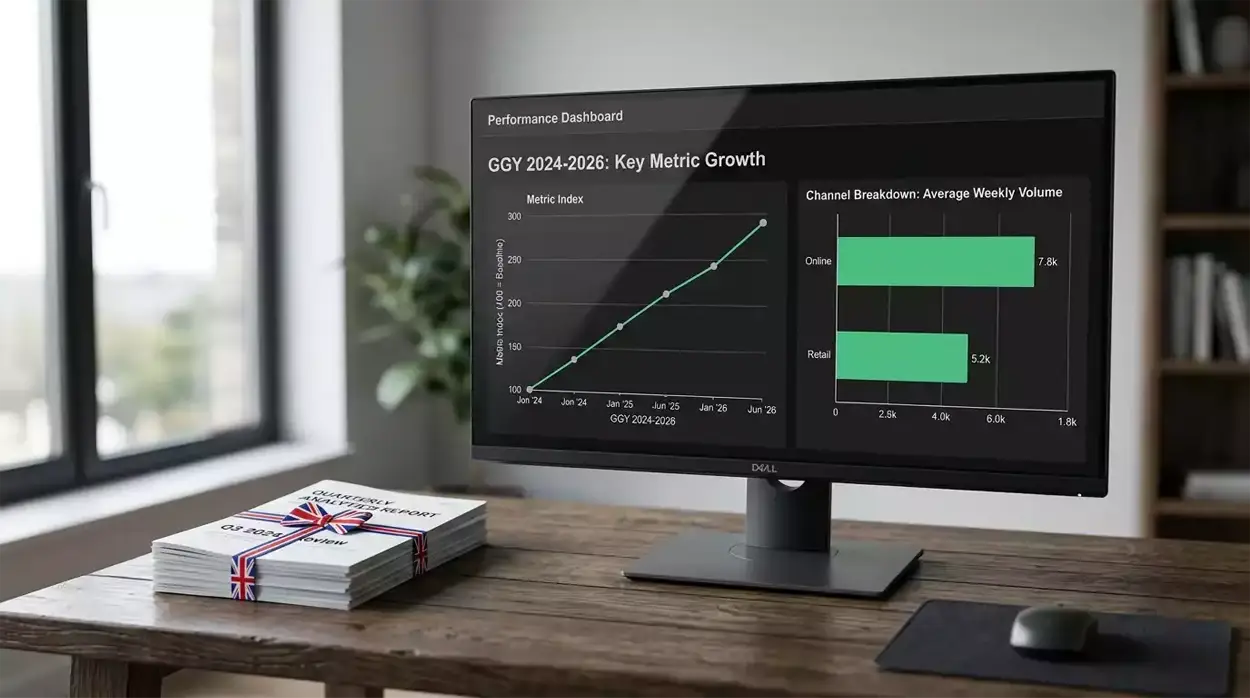
£16.8 bn
Total UK gambling GGY, Apr 2024 to Mar 2025
£7.8 bn
Remote casino, betting and bingo GGY in the same period
£1.55 bn
Online GGY in Q1 2026, up 7% year-on-year
£773 m
Online slots GGY alone in Q1 2026, with active accounts up 6% to 4.8 million
Underneath the headline, the picture is messier than the growth rate suggests. Average GGY per slots session fell from £4.01 to £3.82 in Q1 2026, and the average spin count per session dropped from 136 to 124. That is the £5 stake cap doing its work — smaller bets, fewer spins, and yet the top-line number still climbs because more accounts came in the door. The market is becoming wider and shallower at the same time.
Why the remote split matters. Of the £7.8 billion remote total, £5.0 billion comes from online casino and £2.6 billion from online betting. That ratio — almost two-to-one in favour of casino — is the most important fact in any "best UK sites" discussion, because it tells you where the operator economics, the bonus budgets and the regulatory pressure are actually concentrated.
Then there are the participation numbers. Forty-seven percent of British adults have done some form of gambling in the past four weeks, but strip out lottery draws and that figure collapses to roughly 16–17%. Sports betting in any given four-week window pulls in 16% of men and 4% of women. The picture, in other words, is not one of universal vice. It is a specific, mostly male, mostly betting-focused consumer base, with a much wider casual lottery audience layered on top of it. Any ranking that pretends to speak to everyone is selling you something.
How I Decide Who Earns a Seat at the Table
The first time a friend asked me how I "rank" gambling sites, I said something I should not have said — that I do not really rank them, I score them — and he gave me the kind of look you reserve for people who refuse to pick a side in a football derby. Fair enough. So here is the honest version: there are five filters every operator I take seriously has to pass before I bother comparing welcome bonuses or live-dealer studios.

The five-filter shortlist
- An active UK Gambling Commission operating licence in the right category (remote casino, remote betting, or both).
- A published, working terms-and-conditions page that names the licensee and matches the entry in the public UKGC register.
- Withdrawal timing claims that an actual sample of payouts confirms, not just marketing copy.
- A bonus offer that survives a literal multiplication: stake times wagering equals turnover, and that turnover is realistically achievable inside the bonus window.
- Affordability and source-of-funds workflow that is documented, predictable, and consistent with the £150 trigger from February 2025.
Why those five? Because they map directly onto the failure modes. There are 2,179 licensed gambling operators on the UKGC register, and somewhere inside that number sits every site you have ever heard of and a lot you have not. The variance between the cleanest twenty and the messiest two hundred is enormous, and almost all of it is invisible until you try to withdraw your money or trigger a compliance review.
A worked example of the affordability filter
Suppose a player deposits £80 on a Friday and another £100 on the following Wednesday. Total net deposits within thirty rolling days: £180. That clears the £150 financial vulnerability check threshold.
A well-run operator pulls the frictionless data feed in the background, confirms no signal of vulnerability, and the customer notices nothing — that is the 95% silent-pass rate the Commission's pilot delivered.
A badly-run operator dumps a Word document on the player asking for three months of bank statements and stops play until it arrives. Same regulation, two completely different consumer experiences. That delta is what the ranking is really measuring.
The Three Tiers of British Operators
I do not believe in numbered "top ten" lists for the UK market because the regulatory framework flattens too many differences. What I do believe in is segmentation by economic position, because that is what predicts how an operator will behave when the Remote Gaming Duty bill lands or when an affordability check has to be made in a hurry. There are three tiers worth understanding before you go looking for the specific casino or sportsbook angle you want, and you can read the casino-side breakdown in my full audit of UK online casino sites when you are ready to go deeper on that vertical.

Tier one: the integrated giants
This is where Flutter, Entain and Evoke sit — the parent groups behind the household sportsbook and casino brands. They run multiple licences, integrate sportsbook with casino under single sign-on, spend the largest sums on compliance and absorb the highest regulatory friction without flinching. When Andrew Rhodes told the Betting and Gaming Council's AGM that "recent data published shows that total gross gambling yield is at its highest ever level at £15.6bn", the bulk of that record was generated by tier-one operators carrying tier-one infrastructure. They are also the ones with the most to lose from the 2026 tax stack, which is why their welcome offers have quietly tightened over the past year and their VIP outreach has narrowed.
Tier two: the focused mid-market
This is the layer where the most interesting product work happens. Operators in this band typically hold a single remote casino licence, run their own bonus economics rather than borrowing from a parent, and live or die on operational efficiency. The Commission lists 5,782 active betting shops alongside 8,254 total gambling premises in the latest quarterly count, but the online-only mid-market is a smaller, sharper subset that does not always show up in those land-based figures. A lot of the genuine price competition British consumers benefit from comes out of this tier rather than from the giants.
Tier three: the specialists and new entrants
This is where the recently-licensed sites and the niche-focused operators live. Some are excellent. Some are aggressive in a way that signals weak compliance budgets and a short runway. The 2025 cohort of new launches has been thinner than 2023 or 2024, partly because the regulator has tightened the operating licence vetting process, and partly because the economics of being a new UK operator have got harder. Sports betting specialists, eSports-focused books and the handful of credible no-wagering casino brands all sit here.
Why the segmentation matters more than the order. Sports betting accounts for 56.64% of UK online gambling market value, while casino, slots and live dealer make up most of the rest. A tier-one operator that excels at sports may be mediocre at slots — and a tier-two casino specialist can outperform a giant on payout speed, wagering fairness and customer service while losing on game library breadth. Sorting by tier reveals trade-offs that a numbered top-ten list deliberately hides.
None of this is to recommend a specific operator. The point of the segmentation is that the questions you should ask change depending on which tier you are evaluating. For a tier-one giant, the relevant question is "will this brand pass through the RGD rise in a way that degrades my odds or my bonus pool?" For a tier-two focused operator, it is "does this licensee have the balance sheet to absorb the duty hike without quietly raising wagering requirements?" For a tier-three new entrant, it is the bluntest question of all: "will this site still be here in twelve months?"
Tiering tells you who you are dealing with. The next question is what the regulator actually does to keep those operators honest — because the licence in their footer is not a decoration.
What a UK Gambling Commission Licence Actually Buys You
The first piece of mail I ever wrote to the Gambling Commission was a complaint about a Maltese-licensed site that had been refusing a friend's withdrawal for nine weeks. The reply explained, politely, that the Commission could not help because the operator was not licensed in Great Britain. That moment turned me from a casual gambler into someone who reads licence numbers before he reads anything else on a site footer.

UKGC — the UK Gambling Commission, the executive non-departmental public body that licenses and regulates remote and non-remote gambling activity in Great Britain under the Gambling Act 2005. Northern Ireland operates under a separate regime. If a site is not on the UKGC register, the consumer protections discussed in this article do not apply to it, regardless of how trustworthy it looks.
There are 2,179 licensed gambling operators on the current UKGC register, and 8,254 total gambling premises across Britain when you include the 5,782 active betting shops. Each remote operator has to carry one or both of the main remote licence types — casino or betting — plus the personal management licences that sit on top, plus the software supplier licences for any in-house games. When Tim Miller, executive director of the Commission, told the Peers for Gambling Reform Gambling Summit that there will always be more reform to do but that he encouraged everyone "not to allow a drive for future reforms to be at the expense of effective implementation", he was making a specific point about how much of the licensing framework's value depends on consistent day-to-day enforcement rather than headline policy.
The Commission's enforcement work is heavier than most consumers realise. In the 2025–26 cycle, it issued 741 cease-and-desist notices, referred 397,527 URLs to search providers and succeeded in having 266,667 of them taken down. That is the visible tip of a much larger compliance operation that includes operator audits, mystery-shopper exercises and statutory returns from every licensee on a fixed schedule.
What a licence does and does not guarantee. A UKGC licence guarantees that the operator is subject to British consumer protection law, that complaints can be escalated to a UKGC-approved alternative dispute resolution body, that funds are held in segregated accounts at a specified level, and that the operator is bound by the affordability, anti-money-laundering and safer-gambling rules that apply to every remote licensee. It does not guarantee that the operator will pay quickly, offer good bonuses, treat VIP customers gently or behave impeccably. It guarantees a floor, not a ceiling.
If you want the longer mechanical breakdown of how the licence categories interact, what the application process looks like and how enforcement actually moves from notice to revocation, I have written that out in detail in my explainer on UKGC licensed gambling sites. For the purposes of a ranking, the point is binary: licensed, or not.
Welcome Offers After the Tax Bomb
The most useful thing anyone ever said to me about UK casino bonuses was that they are not gifts, they are pricing experiments. The operator is testing how much friction a customer will tolerate before they walk away, and the wagering requirement is the dial. Everything else — the deposit match, the free spins, the loyalty token — is decoration around that single number.

The wagering arithmetic, in one line: deposit £100, get £100 matched, wagering 35x on the bonus only = £3,500 of qualifying turnover before any winnings can be withdrawn. At an average house edge of 2.5%, expected loss on £3,500 of turnover is £87.50. That is what the £100 bonus is "worth" in actuarial terms before max-bet rules and game-weighting eat into it further.
That arithmetic was already tight before April 2026. The Office for Budget Responsibility's own assessment of the Remote Gaming Duty rise to 40% says operators will pass through up to 90% of the tax increase to consumers through worse odds and smaller bonuses, and that yield from the duty will be £500 million lower by 2029–30 than a static model predicts because customers will displace activity in response. Translation: welcome offers will get thinner, wagering requirements will get higher, and the post-2026 cohort of bonuses will look meaner than what you remember from 2023.
One rule I apply to every welcome offer. If the wagering requirement multiplied by the bonus amount, divided by the maximum bet allowed during the bonus, gives you a number of spins or hands that you could not realistically play inside the bonus window, the offer is structurally unwinnable. It is decoration. The maximum bet rule — usually £5 — is the silent killer of large headline bonuses.
The full bonus mechanic — wagering maths, game weighting, sticky versus non-sticky bonuses, the specific shape of welcome offers versus reloads versus loyalty currency — sits in my UK casino bonuses guide. For this overview, the point is that "best bonus" stopped being a useful ranking criterion sometime in 2024 and is becoming actively misleading in 2026.
Bonus ledger
Enter a welcome offer exactly as the operator advertises it. The sheet on the right works out the turnover behind it, what that turnover is expected to cost you, and whether the offer can be cleared inside its own window.
Slot stakes are capped at £5 a spin.
Players aged 18 to 24 are capped at £2 a spin on slots, everyone else at £5.
A standard 35× offer on the same deposit scores 41.
The expected loss is the house edge applied to the turnover you have to put through, not a prediction of your session. The clearing chance is a modelled estimate from the game's volatility and your starting balance. Weighting, maximum-bet rules and excluded games vary by operator, so read the actual terms before you deposit.
18+ Only stake what you can afford to lose, and never chase losses. Free, confidential support from the National Gambling Helpline on 0808 8020 133.
Where Your Money Goes When You Cash Out
I have a running spreadsheet of withdrawal timings on every site I personally use, and the variance is greater than any other operational metric I track. A clean PayPal or Open Banking payout from a tier-one operator can hit my account inside an hour. The same operator, on a different day, with a different KYC status, can sit on the same amount for three working days. The headline "instant withdrawal" claim covers an enormous amount of operational reality.

| Payment rail type | Typical processing window | KYC friction | Bonus eligibility |
|---|---|---|---|
| Open Banking / Pay N Play | Minutes to hours, once KYC is cleared | Front-loaded at first deposit | Usually full |
| E-wallet (PayPal, Skrill, Neteller) | Hours to one working day | Standard at first withdrawal | Often restricted on welcome offers |
| Debit card (Visa, Mastercard) | One to three working days | Standard | Full |
| Bank wire / Faster Payments | Same day to two working days | Standard | Full |
| Cheque (still offered by a handful of operators) | Seven to fourteen days | Standard | Full |
The behavioural numbers tell their own story. In Q1 2026, the number of average monthly active online accounts came in at 13.4 million — a 1% drop year-on-year — but the session count rose 18% to 202 million, while sessions longer than an hour fell 12% to 8.9 million. People are playing in more, shorter bursts, and they are noticing payout delays more sharply as a result. A site that holds your money for forty-eight hours is essentially throwing away the most-felt part of the customer experience.
The legal ceiling on holding your money. A UKGC licensee cannot withhold a withdrawal indefinitely on operational grounds. They can pause it for source-of-funds review, anti-money-laundering checks or affordability documentation, but each of those has procedural limits and the player has a right to escalation through the operator's complaints process and onward to an alternative dispute resolution body. "Pending" is not a synonym for "lost".
I have written the full operational breakdown — payment rails, KYC delay points, source-of-funds escalations, weekend slowdowns and the specific quirks of Open Banking — in my withdrawal speed guide for UK casinos. If payout timing is the single criterion you care most about, that is the document to read.
Casino Money and Sportsbook Money Are Different Animals
One of the recurring blind spots in "best UK gambling sites" coverage is treating casino and sportsbook as a single product. They are not. They are two completely different economic engines, regulated under separate licence categories, taxed under separate duties, and producing very different consumer experiences inside the same parent brand.
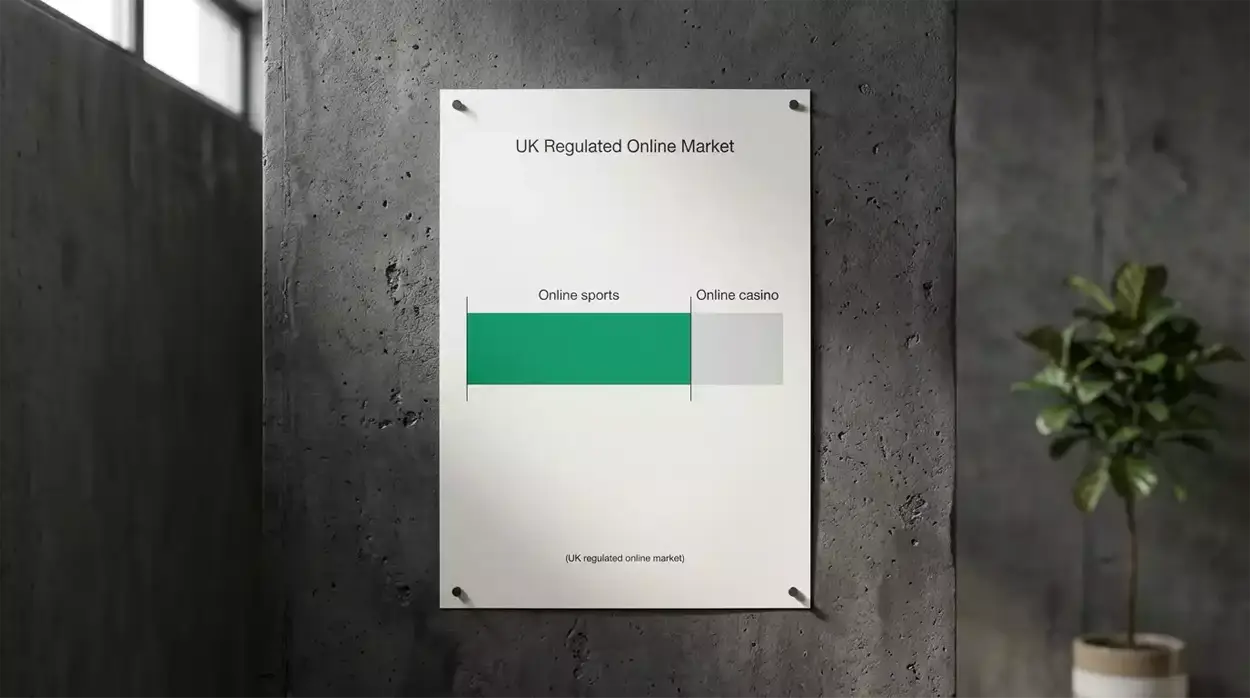
£5.0 bn
Online casino GGY, Apr 2024 to Mar 2025
£2.6 bn
Online betting GGY, same period
56.64%
Sports betting's share of total UK online gambling market value
£773 m
Online slots GGY in Q1 2026 alone
GGY — gross gambling yield, the amount staked minus the amount paid out as winnings, before any operating costs or duties. It is the regulator's preferred top-line metric because it measures actual margin captured rather than turnover, and it is the figure on which Remote Gaming Duty is calculated.
The two products also fail differently. Casino margins are stable, slot RTPs are published per-game, and the player loss curve over time is mathematically predictable. Sportsbook margins are noisier — they depend on event outcomes that the operator cannot fully hedge — and the consumer experience is dominated by odds quality, in-play stability and market depth rather than by RTP. A great UK sportsbook can be a mediocre UK casino in the same login, and vice versa, which is why splitting the analysis by vertical matters more than splitting it by brand. For the deeper sportsbook breakdown — odds margins, in-play stability, the new 25% Remote Betting Duty due in April 2027 — sit with my analysis of UK sports betting sites when this overview leaves you wanting the vertical-specific picture.
The Player-Protection Stack You Are Sitting Inside
A few years ago I sat in a small London office while a clinical psychologist walked me through the difference between two ways of measuring problem gambling. By the end of the conversation I understood why the numbers people quote at each other never seem to line up — and why "safer gambling" in the UK now sits on a stack of overlapping rules that almost nobody can describe from end to end.

PGSI — the Problem Gambling Severity Index, the screen used in the Commission's Gambling Survey for Great Britain. The Annual Gambling Survey for 2024–25 placed roughly 1.4 million British adults — around 3% of the population — at the severe end of the PGSI scale.
GSGB — Gambling Survey for Great Britain, the Commission's official participation and behaviour survey, which replaced the older Health Survey for England gambling module. It reads higher problem-gambling prevalence than the NHS instrument because of its methodology — the NHS DSM-IV/PGSI module continues to report problem-gambling rates of 0.5–0.6%.
That gap — 3% on one instrument, 0.5–0.6% on another — is not a contradiction. It is a methodological difference, and the clinicians I have spoken to are clear that the truth probably lives somewhere between the two. Among 18–24-year-olds, 21.9% are showing a PGSI score of 1 or above, and 5.3% sit in the high-risk PGSI 8+ band. That is the cohort the £2 stake cap was designed for, and the data is one of the few places where the policy and the evidence line up tidily.
Sitting on top of those measurement instruments is a layer of operator-side machinery: mandatory deposit limit prompts, reality checks during play, cooling-off periods, single self-exclusion via GAMSTOP, and the financial vulnerability check at £150 net deposits over thirty rolling days. The Commission's frictionless financial risk assessment pilot, which uses third-party data providers to perform background checks without disrupting the customer, completed at a 95% silent-pass rate in its second-stage update. That number, properly understood, is the most important quietly successful policy result of the past two years.
Do
- Set a deposit limit before you fund the account, not after the first losing session.
- Know whether your operator triggers a frictionless check or a documentary one — ask in writing if it is not stated.
- Use GAMSTOP if you genuinely need a break — it covers every UKGC licensee in a single registration.
- Keep the player-protection tools turned on even when you are winning, because the protective behaviour is what matters, not the current balance.
Don't
- Treat a 95% frictionless rate as a promise that you personally will never be asked for documents.
- Use loss chasing as a recovery strategy — it is the single best predictor of escalating PGSI scores.
- Migrate to an offshore site to avoid a UK affordability check. That move forfeits every protection in the stack.
- Treat self-exclusion as final without speaking to a clinician if you feel you need to undo it.
Why the framework is worth more than any bonus. The cumulative value of the UK player-protection stack — affordability checks, stake caps, GAMSTOP, mandatory tools, dispute resolution — is the structural reason the UK regulated market is worth being inside, even after the tax stack rises. Every consumer protection you walk away from on an offshore site is one you cannot reinstate later.
The 2026 Rulebook Everybody Is Reading at Once
I have never seen so many compliance and finance directors send the same chart in the same week as I did the morning after the Autumn Budget 2025 hit. The chart showed Remote Gaming Duty climbing from 21% to 40% in a single April 2026 step, the new Remote Betting Duty at 25% landing in April 2027, and Bingo Duty being abolished entirely. Grainne Hurst, who runs the Betting and Gaming Council, reached for a Jenga metaphor at the AGM and the metaphor stuck — "you build it up and up, but at some point it will topple", she said, "I am concerned that we are getting to that point now with the mix of regulatory burdens layered on top of tax."

The duty stack, side by side. Remote Gaming Duty doubles from 21% to 40% on 1 April 2026. Remote Betting Duty introduces a 25% rate on most online betting from 1 April 2027, with horse racing held at the existing 15% General Betting Duty. Bingo Duty falls to zero on the same day as the RGD rise. Together, the Treasury expects an additional £810 million in 2026/27, rising toward £1.16 billion annually by 2030/31.
That is the macro picture. The micro picture is that the tax burden almost entirely lands on remote casino, which is the segment with the thinnest operator margins, the most price-sensitive customers and the easiest displacement path to the illegal market. Three hundred and ten businesses are directly affected — 160 remote betting, 95 remote gaming, 55 both — and every one of them is rewriting their bonus economics in real time.
How a 19-point duty rise actually moves the consumer experience
Suppose an operator's pre-tax GGY on a £100 stake is £4.50, at a 4.5% effective margin. Under 21% RGD, the duty bill is £0.945, leaving £3.555 to cover acquisition cost, retention, payment processing, customer service and profit.
At 40% RGD, the duty bill on the same £100 stake is £1.80. Pre-tax GGY has to rise to £5.40 to leave the same net £3.555 — and the only way to lift GGY without losing customers is to tighten effective odds, raise wagering requirements, or shrink the welcome offer pool.
That is the channel through which a 19-point duty rise reaches your bonus terms and your slot RTP. The OBR estimates operators will pass through up to 90% of the increase.
Sitting alongside the duty change is the second consumer-facing reform: the £5 stake cap on online slots for players 25 and over, in force since April 2025, and the £2 stake cap for 18–24-year-olds since May 2025. The Commission's market-impact data for Q1 2026 shows the behavioural effect — average GGY per session down from £4.01 to £3.82, average spins per session down from 136 to 124. The cap is doing exactly what the policy promised, but it is doing so against a tax background that is forcing operators to find revenue elsewhere.
The third moving piece is the statutory gambling levy, in force since 6 April 2025, charging operators between 0.1% and 1.1% of GGY depending on vertical, with the goal of collecting more than £100 million a year for research, education and treatment. That figure is now permanent, replacing the old voluntary RET arrangement that anti-gambling campaigners had spent a decade describing as inadequate.
The most important sentence in the Budget impact document. The OBR's note acknowledges that yield from the duty rise will be £500 million lower by 2029–30 than a static behavioural model predicts, because customers will displace activity. Read that carefully. The official Treasury position is that the tax rise will partially fund itself by pushing customers into worse outcomes — fewer bonuses, tighter odds, and almost certainly a bigger illegal market.
The Other Market, Hiding in Plain Sight
The first time I tried to count how many UK-facing illegal gambling promotions there were in a single afternoon's web crawl I gave up at three thousand. The numbers since then have only got worse. Ismail Vali, who used to run Yield Sec and now runs Gaming Compliance International, put it as bluntly as anyone has: "Illegal online gambling in Great Britain is now knocking on the door of 10% market share and it has achieved this through the cynical exploitation of two vulnerable audiences: children and self-excluded gamblers on the Gamstop scheme."
84% of all illegal gambling promotional content targeting Britain in 2025 was anchored to the phrase "Not on GAMSTOP". That marketing mechanic — building an entire offshore industry on the back of a self-exclusion scheme designed to protect the most vulnerable — is the single ugliest fact about the UK gambling market in 2026.
The growth curve is what scared the regulator into action. The illegal share of UK online gambling has gone from 0.43% in 2020 to roughly 9% in 2025–26, with H2 Gambling Capital forecasting 19.2% by 2028. Stakes on illegal sites are projected to climb from £17 billion in 2025 to £33 billion by 2028. There are 531 active illegal betting and casino operators targeting Britain, supported by more than 1,100 affiliates pushing traffic to them. Grainne Hurst's response to the latest forecast was characteristically direct: "These forecasts are a wake-up call. The black market is not a distant threat; it is growing fast, becoming more visible, and attracting billions of pounds in stakes from British customers."
The compounding harm. A Gaming Compliance International study of illegal gambling streams targeted at UK audiences found that 89% of those streams carried malware, spyware or keystroke loggers. The black-market problem is not only consumer protection erosion. It is an active cybersecurity threat aimed at exactly the demographic least equipped to handle it. Six hundred thousand UK adults are registered with GAMSTOP, and roughly 8% of them — about 48,000 people — have used unlicensed operators since registering.
There is no version of the 2026 ranking that ignores this dynamic. When the Betting and Gaming Council's chief executive describes the illegal market as "the single biggest threat facing our industry, and that threat is growing in scale, in sophistication and in harm", she is not making a political point. She is reading numbers that the Commission and independent researchers both endorse. The regulated market has done a serious job at protecting customers. The unregulated market is making sure that job gets harder every quarter.
What the People in the Room Are Actually Saying
I spend a non-trivial portion of every working week listening to people who have to be careful about what they say in public, and the gap between what is said on stage at industry events and what is said over coffee afterwards has never been wider. Some of the publicly-stated positions are worth sitting with for a moment because they frame the entire 2026 ranking conversation.

Andrew Rhodes, chief executive, UK Gambling Commission, set the year's framing at the BGC AGM by noting that "recent data published shows that total gross gambling yield is at its highest ever level at £15.6bn." That is the regulator's headline number, and the subtext is that record growth and rising harm have to be managed together rather than traded off against each other.
Tim Miller, executive director, UK Gambling Commission, raised the implementation problem at the Peers for Gambling Reform summit: "There will always be more to do, but my encouragement to all of those that have an interest in making gambling fair, safe and crime free is: do not allow a drive for future reforms to be at the expense of effective implementation." The message is that the rulebook is now mostly written; what matters now is whether anyone enforces it.
Baroness Fiona Twycross, Minister for Gambling, framed the regulatory direction this way during the Crime and Policing Bill introduction: "Vigilance is vital when the illegal market threatens revenue for licensed operators and the safety of consumers. The reforms we have introduced, in collaboration with the Gambling Commission, strike a balance between industry growth and enhanced player protections." That balance — growth and protection in the same sentence — is the political position every operator has to design around.
Tim Miller again, on the crypto vector: "Our illegal markets research also gives us evidence that crypto is one of the two biggest searches that lead British gamblers to illegal sites." That sentence alone is the reason cryptocurrency has not become a payment rail on UKGC-licensed sites. The regulator sees crypto as a leading indicator of black-market migration, and the licensed sector has read the room.
How to Read This Ranking and What to Do Next
The single most useful thing I can tell a British gambler at the start of 2026 is that the regulated market is worth being inside, that the consumer protections built into it are real, and that anyone trying to lure you outside it — onto an offshore "not on GAMSTOP" site, onto a crypto-only casino, onto an affiliate funnel with no operator name in the footer — is exploiting the very protections they are asking you to give up. That is not the industry's view. That is the data from the regulator, the academic researchers, the clinical literature, and the parallel work that independent market analysts have done since 2020.

Before you fund any account in 2026
- Verify the UKGC licence number against the public register.
- Read the actual terms and conditions for the welcome offer — not the marketing summary.
- Set deposit, loss and session limits before the first transaction lands.
- Confirm the affordability check process in writing — frictionless or documentary.
- Note the published withdrawal timing claim, then track your first payout against it.
- If anything feels wrong, escalate through the operator's complaints process and onward to an alternative dispute resolution body — that machinery exists because it works.
The best UK gambling sites in 2026 are not defined by the size of their welcome offer. They are defined by whether they can absorb a 19-point duty rise, a £150 affordability threshold, a £5 stake cap and a 9–10% illegal market eating at their margins, and still deliver a product that respects the customer. That filter eliminates most of the noise. What is left is a ranking framework you can actually use.
Those are the public positions. Below are the questions readers actually send me when the regulatory abstraction stops being abstract.
Questions British Players Ask Me Most
Which gambling sites are considered the best in the UK for 2026?
"Best" is a tiered judgement, not a single ranking. Among the 2,179 UKGC-licensed operators, the tier-one integrated giants — the brands sitting under Flutter, Entain and Evoke — carry the deepest compliance budgets and the widest product range, while the tier-two mid-market does the sharpest product work on individual verticals like sports betting or casino. The honest answer is that any operator passing the five-filter shortlist — active UKGC licence, transparent terms, audited payout timing, fair wagering arithmetic, predictable affordability workflow — is a candidate, and the right pick depends on which vertical you care about most.
How does the UK Gambling Commission licence online operators?
The Commission issues operating licences in two main remote categories — remote casino and remote betting — plus separate licences for software suppliers and personal management licences for senior staff. Each application goes through financial, fit-and-proper and technical due diligence, and licensees are bound by ongoing reporting obligations, anti-money-laundering rules, advertising codes and the affordability and safer-gambling framework. The Commission's enforcement record in the last cycle included 741 cease-and-desist notices and the takedown of 266,667 URLs.
Why has the UKGC introduced a £150 affordability check at all?
The £150 threshold for net deposits over thirty rolling days, in force from 28 February 2025, exists because the previous £500 trigger let too much harm accumulate before any operator-side review took place. The frictionless data feed used in the pilot completes invisibly for 95% of players, so for most consumers the check is something they never see. The remaining 5% are the cases where the regulator wants the operator to slow down and look, and the lowered threshold reflects clinical evidence that financial vulnerability indicators show up well before £500 of deposits accumulate.
How will the Remote Gaming Duty rise to 40% affect UK players?
The OBR's official estimate is that operators will pass through up to 90% of the tax increase to consumers through worse odds, lower bonus pools and tighter wagering terms. The Treasury also expects yield from the duty to come in £500 million lower by 2029–30 than a static model predicts, because customers will displace activity in response. In practical terms, that means thinner welcome offers, tighter slot RTP variants where operators have a choice, and a measurable increase in pressure on the illegal market.
What stake limits apply to online slots in Britain?
Since 9 April 2025, the maximum stake per spin on online slots is capped at £5 for players aged 25 and over. Since 21 May 2025, the cap is £2 per spin for 18–24-year-olds, who carry materially higher PGSI-measured risk. The Commission's Q1 2026 market-impact data shows average GGY per slots session dropped from £4.01 to £3.82 and average spins per session from 136 to 124 since the caps took effect.
Is GAMSTOP mandatory for every UK gambling site?
Every UKGC-licensed online gambling operator is required to participate in GAMSTOP, which means a single self-exclusion registration blocks the user from all licensed UK gambling sites simultaneously. More than 600,000 people are currently registered. Sites that advertise themselves as "not on GAMSTOP" are by definition not UKGC-licensed and are operating outside the British consumer protection framework. The black market exploits this gap deliberately — 84% of illegal gambling promotions in the UK are anchored to "Not on GAMSTOP" marketing.