Best Mobile Gambling Apps UK: iOS and Android Releases for Britain in 2026

Updated July 2026
Licensed
Available in US
Fast payouts
18+ Only
Best Mobile Gambling Apps UK: iOS and Android Releases for Britain in 2026
Last updated: Reading time: 9 min

Why mobile is where UK gambling now actually lives

The desktop gambling site is a heritage product in 2026. Q1 2026 Gambling Commission data shows 13.4 million monthly active online accounts, with session counts up 18% year-on-year to 202 million. The session-count growth is happening on phones — desktop sessions are flat, mobile sessions are doing all the work. Every meaningful UKGC operator now treats mobile as the primary surface and desktop as a legacy companion. That ranking would have been backwards five years ago.

The number that interests me more, though, is the 12% drop in long sessions over an hour. Mobile gambling is shorter, more frequent, and more interruption-driven by design. The phone in someone’s pocket buzzes with notifications between hands, before a withdrawal completes, and after a deposit clears. That changes the product fundamentally. The best mobile apps in 2026 have leaned into the notification logic and the brief-session pattern; the worst still feel like a shrunk-down desktop site.

Native app versus mobile web — what the difference actually is

Operators in 2026 ship one of two products on a phone: a native iOS or Android app downloaded from the store, or a progressive web app loaded in the mobile browser. The technical distinction matters because the regulator and the app stores treat them differently.

Two smartphones side by side comparing a native gambling app and a mobile web version

A native app is a binary installed on the device. It can use biometric login (Face ID, fingerprint), push notifications, and offline cached graphics. The cost is that Apple and Google review the app before it ships and can reject updates that breach their gambling policies. A progressive web app loads in Safari or Chrome and behaves much like an app, with home-screen shortcut, full-screen mode, and most of the responsiveness of a native build — but no biometric integration through the operating system and no push notifications on iOS until very recently.

For UK operators, the routes split by content. Sports betting apps almost always go native because Apple and Google permit them subject to verification. Pure online casino apps face stricter store policies, which is why several UK casino brands still operate mobile-web first, with a small native shell wrapped around a web view. If you look at the app screen and it loads in two seconds with a faint white flash, you are almost certainly inside a web view.

App store policies that shape what UK players can install

Tim Miller of the Gambling Commission said at the Peers for Gambling Reform summit in September 2025 that “there will always be more to do, but my encouragement to all of those that have an interest in making gambling fair, safe and crime free is: do not allow a drive for future reforms to be at the expense of effective implementation.” That observation lands hardest in the mobile app space, because effective implementation here means coordination with two private gatekeepers — Apple and Google — that the regulator does not control.

Mobile app store page for a UKGC-licensed gambling app

Apple’s App Store has tightened gambling app policies multiple times since 2019. Native real-money gambling apps require the developer to confirm UKGC licensure, restrict the app to UK App Store IDs, and meet additional safety requirements including in-app self-exclusion and reality checks. Apps that fail an annual review get pulled, and the operator loses iOS distribution overnight. Google Play has a similar gating, but the technical barrier to side-loading on Android means some operators publish APKs directly on their websites for UK customers — a route Apple does not permit on iOS.

The practical effect for British players: the iOS App Store carries fewer UK gambling apps than the Google Play Store, and considerably fewer than the operators’ own websites distribute. A casino brand might offer a native Android app, a slimmer iOS app missing some features, and a full progressive web experience to cover the gap. The brand is not hiding anything — the App Store reviewer just rejected the build.

Top apps by category and what to look for

Sportsbook apps are the most mature mobile gambling category in the UK. The big sportsbook brands ship apps that handle live in-play markets, cash out, request-a-bet, and full account management with first-class polish. The Gambling Commission’s register of 2,179 licensed operators contains a couple of dozen serious sportsbook brands; on mobile, the differentiation is in execution speed of in-play market suspensions and the cleanliness of cash-out logic.

Multiple phone screens showing sportsbook, casino and bingo app sections

Casino apps split into slots-led builds and live-dealer-led builds. Slot apps benefit from native-app smoothness and offline cached graphics: reels animate cleanly, the £5 stake cap is enforced at the input level, and reality checks are surfaced as full-screen interrupts. Live dealer apps stand or fall on streaming quality — a four-second video lag breaks the product. The best live-app implementations transcode the stream specifically for mobile data networks and pre-buffer the dealer’s audio so the player does not hear chair scrapes a beat late.

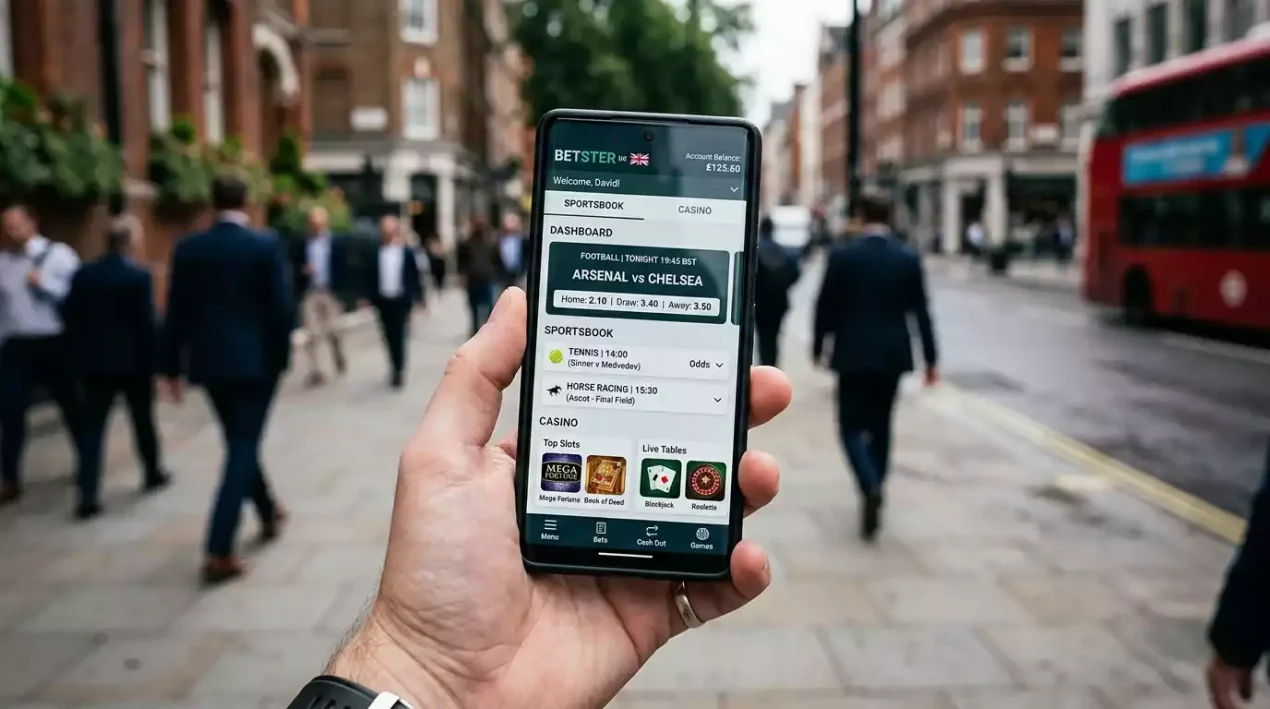
Multi-vertical apps that bundle sportsbook, casino, bingo and poker into one shell are the format the largest operators ship in 2026. They solve a single-sign-on problem and let the operator cross-sell across products inside one screen. The downside is bloat — a 250MB install that updates weekly drains battery and storage. Several of the operators behind these apps have launched recently and are profiled in recent UKGC casino launches, which is worth reading alongside this if you are comparing fresh brands.

Mobile-specific user experience issues that still get fudged

Player using face biometric login on a UK gambling app

The biometric login flow is the test I run on any new app. Setting up Face ID or fingerprint should take one screen and never resurface as a question. Apps that ask you to type a password every fortnight have failed the basic mobile experience. The reason this matters: a player who has to remember a password is a player who eventually clicks “forgot password” and ends up doing KYC re-verification for no reason. Friction kills momentum, and the apps that minimise it retain customers better.

Notifications are the other minefield. UKGC marketing rules limit what gambling apps can push to users — promotional pushes are restricted, especially for self-excluded or affordability-flagged accounts. The good apps surface transactional notifications only (deposit confirmed, withdrawal processed, market settled) and put promotional opt-ins behind a clear toggle in the settings. The bad apps default-opt-in to marketing pushes and bury the off-switch, which has cost several operators public enforcement action.

One detail that nobody mentions in app reviews: how the app handles a lost-connection event mid-bet. A well-built sportsbook app stores the bet attempt locally and replays it when the network returns, with a clear screen telling the player what happened. A poorly built one just throws an error and forgets the user ever tried. Across 202 million sessions a quarter, the small percentage where this happens adds up to real revenue and real disputes.

The mobile shape of British gambling at the close of 2026

Mobile is no longer a feature, it is the surface. The apps that look strongest at the end of 2026 are the ones that designed for short, frequent, interruption-prone phone sessions instead of porting desktop assumptions. The £5 slot cap fits a phone session better than it fitted a desktop session, and the average GGY per slot session has fallen from £4.01 to £3.82, which is the cap working as intended on the surface where it is now consumed.

Commuter checking a gambling app on a phone on a UK train

The honest assessment for anyone choosing a mobile app: start with whether the operator has a native iOS app, a native Android app, or a mobile web wrapper, and let that guide the rest. If you live on iPhone, an operator without an App Store presence will frustrate you. If you live on Android, you have more options because of the side-loading route. After that, the criteria are the same as for any UK gambling operator — UKGC licence verified, RTP transparency on slots, payout speeds documented, responsible-gambling controls accessible from the home screen of the app.

Why are some UKGC apps unavailable on the iOS App Store?

Apple’s App Store gambling policies are stricter than Google Play’s, with annual reviews and a narrower content envelope. Some UK casinos cannot or choose not to ship an iOS build that passes review, so they distribute via mobile web only. The licence is the same UKGC remote licence either way — the distribution route differs.

Do mobile UK casino apps offer different bonus terms?

Occasionally yes. Some operators run mobile-exclusive welcome bonuses or push notification promos to in-app users. UKGC rules require the same wagering and fairness conditions to apply whether the bonus is claimed in the app or on desktop, so the differences are usually in qualifying criteria rather than in the underlying maths.

Can a single sign-on cover casino and sportsbook in one UK app?

Yes, when both products sit under the same operating licence and the operator has built a unified account. The largest UK gambling brands ship multi-vertical apps where one login covers sportsbook, casino, live dealer and bingo. Account history, deposit limits, and affordability data are then shared across products.

This material was created by the PunterLedger team.

Related posts