No Wagering Casinos in the UK: How the Promise Holds Up in 2026
Why the no wagering label still sells
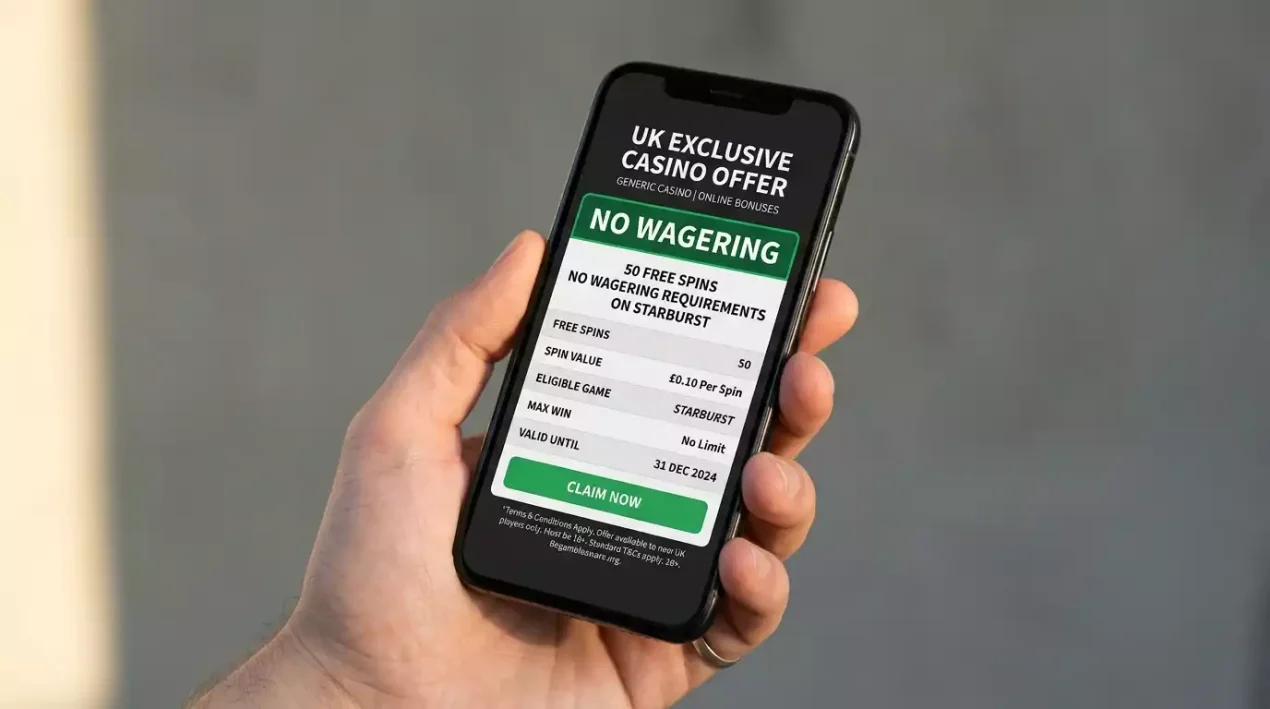
The first time a player handed me a screenshot of a “no wagering” bonus offer back in 2020, I read it three times to find the catch. There was always a catch. Six years on, the no wagering format is a recognisable category on UK casino sites, and the catch has moved from the maths to the small print. The premise is simple: any winnings from a bonus are real money, withdrawable without a playthrough requirement. The reality is more layered, and 2026 is the year that layered detail finally started to matter to the average British player.
Q1 2026 saw 4.8 million active accounts in online slots, with the number of long sessions over an hour falling 12% to 8.9 million. Bonus shoppers used to chase wagering targets across those long sessions. Cap them, and the no wagering format suddenly looks less like a gimmick and more like the natural shape of a bonus offer designed for a shorter, more frequent style of play.

What no wagering actually means under UKGC rules
Nine years of reading bonus T&Cs has taught me one thing: the phrase “no wagering” is not a UKGC term. It is a marketing label, and it covers at least three different product designs. The first is the genuine version: spins or a small cash bonus where any winnings convert directly to cash with no playthrough at all. The second is a hybrid: free spins with zero wagering on winnings, but a max cashout cap of £20, £50 or £100. The third is the misleading version: “no wagering” on the bonus itself, but a minimum deposit requirement before the bonus winnings can be withdrawn.
The Gambling Commission’s licence conditions require all bonus terms to be transparent and not misleading. In practice, that means an operator advertising a no wagering offer cannot bury a cashout cap or a deposit requirement on a separate page. The terms must be visible at the point of claim. That standard has been enforced more aggressively since the 2,179 licensed operators on the UKGC register were reminded in 2024 that bonus advertising falls under the same fair-and-open rule as game rules and odds.
One quote from the Commission’s Tim Miller has stayed with me on this point. He said in 2025 that “there will always be more to do, but my encouragement to all of those that have an interest in making gambling fair, safe and crime free is: do not allow a drive for future reforms to be at the expense of effective implementation.” Bonus transparency is exactly that kind of implementation question — the rules already exist, the issue is whether operators are following them in spirit as well as letter.

The maths nobody runs before claiming
Most players evaluate a no wagering offer by comparing the headline number to a standard bonus. Twenty free spins with no wagering against fifty free spins with 35x wagering: which is better value? The honest answer depends on the slot’s RTP, the volatility, and the max cashout cap, but a rough calculation gets you most of the way there.
Imagine fifty spins at 20p stake on a 96% RTP slot. Expected return: roughly £9.60. With 35x wagering on bonus winnings of, say, £9.60, the player needs to wager £336 to convert that to cash. At 96% RTP that wager expects to lose £13.44 — meaning the bonus is mathematically worth less than nothing in expectation. Twenty no wagering spins at the same stake on the same slot expect to return £3.84, and every penny of that is withdrawable. The bigger bonus is the worse one, and most players never run the numbers.
The cashout cap is where the no wagering format gets honest or dishonest. A cap at 10x the value of the free spins is fair; a cap at 1x or 2x effectively means the player will hit the ceiling on any meaningful win and forfeit the upside. I refuse to call an offer “no wagering” in my own notes if the cashout cap is below 5x the implied bonus value. It does not meet the spirit of the term.

Where the no wagering format works best
I have watched players use no wagering bonuses well in exactly one scenario: as a low-stakes way to try a new operator without committing real money to the wagering treadmill. The format is not built to deliver windfalls; it is built to deliver a small, real cash trial. Used that way, it works.
The numbers back this up. Average GGY per slot session in Q1 2026 sat at £3.82, with average spins per session at 124. A no wagering offer of 30 spins at 20p stake delivers, on a 96% RTP slot, an expected real-cash return of about £1.43 — roughly a third of a typical session’s net loss. That is not life-changing money. It is a meaningful taster, and a player who treats it that way will not be disappointed by the cashout cap.
The format fails when players treat it as a way to extract guaranteed value from operators. The expected return of a small no wagering bonus is small. If a player is grinding multiple sites for these offers, the time-to-money ratio rapidly becomes worse than minimum wage. Bonus arbitrage as a business model died around 2019; no wagering offers did not bring it back.

How to read a no wagering bonus in 30 seconds
My checklist when I open a no wagering offer page has six steps and takes under a minute. First: is the bonus a cash amount, a number of free spins, or a percentage match? Second: what is the per-spin stake on the spins, and on which slot? Third: is there a cashout cap, and if so, what is the multiplier of bonus value? Fourth: is there a minimum deposit required before withdrawing winnings? Fifth: which payment methods are excluded from claiming or withdrawal? Sixth: what is the expiry window?
The fifth one trips up more players than any other. UK operators routinely exclude e-wallets from bonus eligibility, and that pattern extends to no wagering offers. If you funded an account via Skrill or Neteller, the bonus may simply not credit. The transparency rule means this has to be disclosed, but disclosure often means a tiny footnote rather than a banner. For the wider mechanics of how e-wallets interact with UK casino accounts, see the cashback offer mechanics piece, which covers some of the same exclusion patterns.
The sixth step matters more than it should. A no wagering bonus with a 24-hour expiry on the spins is almost certainly designed to be forfeited. A seven-day expiry is fair. I treat anything shorter than 72 hours as a red flag, because the operator is calculating that a significant share of recipients will not claim in time.

What no wagering will look like by the end of 2026
I expect the format to consolidate this year for two reasons. First, the Remote Gaming Duty hike from 21% to 40% from April 2026 has reshaped operator economics, and bonuses with zero wagering attached are now genuinely expensive to give away. Several mid-tier operators have already pulled their no wagering offers entirely or rebranded them as 1x-wagering products that meet the same psychological promise.
Second, the financial vulnerability framework that went live alongside the £150 light-touch threshold has made operators more cautious about giving away playable cash to new accounts they have not yet risk-assessed. A no wagering offer to a player who has not completed identity verification is now a much smaller compliance bet than it was two years ago.
For players, the read-through is simple. Genuine no wagering offers will become rarer and smaller, but the ones that survive will be more honest by necessity. The duty environment has done what years of regulator nudging could not: it has made misleading no wagering offers economically unattractive to run. Watch the cashout cap, watch the expiry window, and treat the format as a small taster rather than a value play, and the category still earns its place in the UK bonus landscape.

Are no wagering bonuses really free money at UK casinos?
Genuine no wagering bonuses give winnings as real cash with no playthrough, but most carry a cashout cap that limits the maximum withdrawable amount. The expected return on a typical 20-spin no wagering offer at 20p stake is around £1 to £2.
Why do some UK operators exclude e-wallets from no wagering offers?
E-wallets like Skrill, Neteller and sometimes PayPal are commonly excluded from bonus eligibility due to higher historical rates of bonus abuse. The exclusion must be disclosed in the bonus terms under UKGC transparency rules.
Did the 2026 Remote Gaming Duty rise affect no wagering offers?
Yes. With the duty climbing from 21% to 40% from April 2026, operators have either reduced the size of no wagering offers, added cashout caps, or moved to 1x wagering instead. The economics of zero-playthrough bonuses changed significantly.
This material was created by the PunterLedger team.