eSports Betting Sites UK: Regulated Books Covering CS2, LoL and Dota 2 in 2026

Updated July 2026
Licensed
Available in US
Fast payouts
18+ Only
eSports Betting Sites UK: Regulated Books Covering CS2, LoL and Dota 2 in 2026
Last updated: Reading time: 9 min

eSports has been a slow-burn arrival rather than a sudden wave

Every two years someone publishes a report predicting eSports betting will overtake football in the UK by next Tuesday. It has not happened, and it will not happen on the current trajectory. What has happened, quietly, is that eSports has gone from a curio in the UK sportsbook lobby to a serious vertical with deep markets at the major events. CS2, League of Legends, and Dota 2 are now treated as regular pricing assignments by the trading desks at all the major UK books, with daily liquidity comparable to a Championship football fixture.

Online sports betting holds 56.64% of the UK online gambling market by share, and eSports is a small but growing percentage inside that. The growth is real even if the absolute numbers are still modest compared with football or racing. What makes the segment interesting is the demographic: eSports punters skew significantly younger than the typical UK sportsbook customer, which means the operators that build eSports presence are also building tomorrow’s high-value sportsbook customer base.

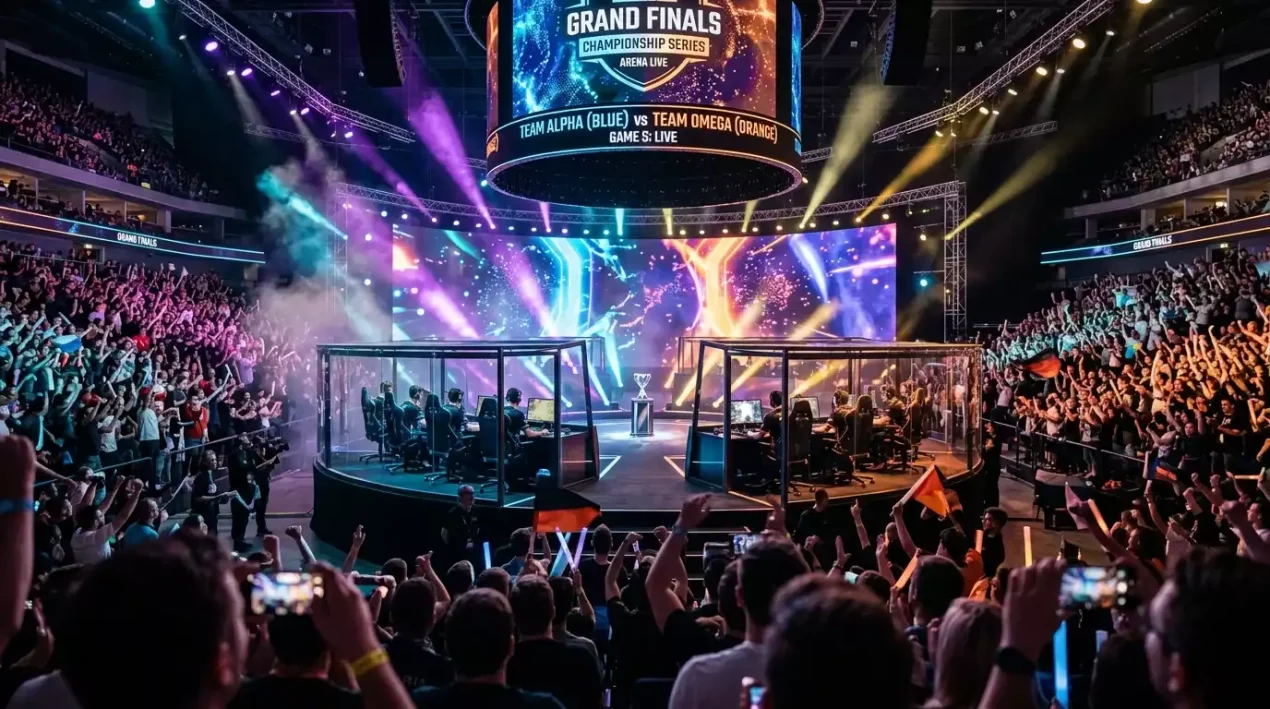
Packed eSports arena during a major international tournament final with stage lighting

Which titles UK books actually cover

Counter-Strike 2 is the dominant eSports product on UK sportsbooks in 2026. The professional tournament circuit — IEM, BLAST Premier, ESL Pro League, the Majors — runs effectively year-round, generating daily liquid markets. The format is short enough (best-of-three matches lasting 60 to 90 minutes) to suit live in-play betting cleanly. CS2 is the eSport that operators trade most actively.

League of Legends is the second tier — deep liquidity during the LCK, LEC, LCS, LPL regular seasons and the Worlds finals in October, lighter coverage in the spring split’s mid-table fixtures. The match format runs longer than CS2, with best-of-five series at major events sometimes lasting four hours, which complicates in-play but supports rich pre-match markets.

Dota 2 sits in a clear third tier on UK books. The International (the headline annual tournament) generates significant betting interest, but the regular tour produces thinner markets across the year. Books that cover Dota 2 in detail are doing so because they have built operational expertise; the casual sportsbook will offer only top-line markets on major Dota fixtures.

The fourth tier is everything else: Valorant, Call of Duty League, Rocket League, FIFA/EA Sports FC competitions, Rainbow Six Siege, Apex Legends, Mobile Legends Bang Bang. UK books cover these inconsistently and with shallow market depth. A specialist eSports book — there are a few — will offer broader catalogues, but the major UK sportsbooks treat anything beyond CS2 and LoL as optional.

Counter-Strike 2 professional team practicing at a bootcamp ahead of a Major tournament

Live and pre-match pricing quirks

Pre-match eSports pricing in 2026 has matured to something approaching traditional sports parity. The major UK books employ specialist traders for CS2 and LoL who build markets from team form, recent results, map pool analysis, roster changes, and patch-version impacts. The overround on the moneyline of a top CS2 match might be 104–106% — similar to a Premier League fixture. The depth of player prop markets is shallower than football, but growing.

Live in-play eSports is where the format gets distinctive. CS2 betting in-running prices each round, sometimes each kill. The trader has to handle pace of game (faster than any traditional sport), match-fixing risk (more acute than traditional sport because of relatively small purse sizes for some teams), and the technical reality that the eSports match could be paused for half an hour while a developer-side bug is investigated. The operators that have built robust eSports live trading are the ones that have invested heavily in the infrastructure.

Two specific quirks worth knowing: pause handling and incomplete match settlement. A traditional sport rarely pauses for technical reasons during a match. An eSports match pauses fairly regularly. The operator’s terms on whether bets are settled, suspended, or voided during a pause varies significantly between books. The other quirk is forfeit: a team can be disqualified or forfeit mid-series for rule breaches or visa issues. The settlement of bets on the forfeited match needs to be clear in the operator’s terms before you bet.

Live in-play eSports betting interface showing round-by-round CS2 markets on a desktop

Match-fixing risk and the integrity bodies

eSports has a documented match-fixing problem at the lower tiers of professional play. Mid-tier players in Eastern Europe and South America have been convicted or sanctioned for throwing matches in exchange for relatively small payments — the financial gap between the player and the eSports betting market is large enough to make manipulation tempting. The major tournaments are well-policed, but second and third-tier circuits remain higher-risk than equivalent levels in traditional sport.

The Esports Integrity Commission (ESIC) is the body most UK regulated bookmakers report to for suspected match-fixing patterns. ESIC investigates flagged matches, publishes sanctions against banned players, and shares intelligence with sportsbooks and tournament organisers. The IBIA (International Betting Integrity Association) provides similar coverage for the operator side, channelling unusual betting pattern alerts from member books to relevant authorities.

The UKGC requires its licensees to participate in integrity-monitoring frameworks for the sports they price. For eSports, that practical compliance means subscribing to ESIC alerts or equivalent, with internal trading desks empowered to suspend markets when an integrity concern arises. This connects to the wider responsible gambling and safer gambling architecture that sits across the UK regulated industry — for the broader picture of those controls, see how safer gambling tools compare across UKGC sites.

eSports integrity analyst reviewing match telemetry on monitors in a tournament control room

eSports volume versus traditional sport

The honest comparison: a major CS2 final generates betting volume on a UK book that might match a mid-table Premier League midweek fixture. The Worlds finals in League of Legends can spike higher, occasionally approaching Premier League weekend volume. The annual International for Dota 2 produces a similar spike. Outside these peaks, daily eSports volume is comfortably below daily football volume across all UK books.

What the volume comparison misses is engagement depth. eSports punters tend to be more knowledgeable about their game than equivalent recreational football punters are about football. They bet smaller stakes more frequently, watch more of the matches they bet on, and engage more deeply with the trading and pricing process. The customer is more valuable per pound staked than a casual coupon football punter, which is why operators invest in the segment despite the lower headline volume.

The growth trajectory is real but linear, not exponential. eSports betting in the UK has roughly doubled in volume between 2022 and 2026, a healthy growth rate but nothing like the early-decade predictions of explosive expansion. The natural ceiling appears to be a single-digit percentage of overall UK sports betting volume in the medium term, with the eSports segment achieving structural significance rather than disruptive scale.

League of Legends Worlds Finals stage set up in front of a packed international audience

Picking a UK book for eSports specifically

The honest test for a UK eSports book is whether it prices the title you actually watch. If you follow CS2 every weekend, the major UK sportsbooks all serve you well. If you follow Valorant Champions Tour, your options narrow significantly. If you follow Mobile Legends, you are looking at a small handful of specialist books or accepting that the major UK book will offer only headline markets on Asian league finals.

The second test is in-play handling. A pre-match coupon is the same product whether you bet at one book or another. Live in-play eSports is where the books differentiate. Suspend timing, pause handling, kill-by-kill pricing on CS2, dragon and baron control pricing on LoL — these are the areas where some books invest and others do not. A serious eSports punter should sample the live experience at two or three operators during an actual match before committing to one.

The third test is settlement consistency. The first time a book settles a forfeit or a partially-completed match in a way you do not understand, read the settlement rules carefully and check whether the operator applied them correctly. The books that handle weird scenarios well are the books that have been pricing eSports seriously for years. The books that improvise are the books still treating it as a side hustle.

Young UK eSports fan watching a live tournament stream on a laptop while comparing odds on a phone

Why do UK books offer thinner markets on Dota 2 than on CS2?

Dota 2’s regular-season tournament circuit produces less consistent liquidity than CS2’s year-round professional calendar. The format is also longer and more complex to price in-play. Major events like The International draw deep coverage, but the rest of the calendar attracts less trading desk investment from UK operators.

Which integrity body do UKGC bookmakers report to for eSports?

The Esports Integrity Commission (ESIC) is the primary integrity body for the eSports side, with IBIA (International Betting Integrity Association) carrying the operator-side framework. UKGC licensees are required to participate in integrity-monitoring arrangements for the sports they price, which for eSports means subscribing to ESIC alerts or equivalent.

Are skin-bets considered gambling in the UK?

Yes. The Gambling Commission has been clear since 2016 that wagering of in-game items convertible to real-world value constitutes gambling under UK law. Skin-betting sites targeting UK consumers without a UKGC licence are operating unlawfully. The Commission has taken enforcement action against several skin-betting operators serving British players.

This material was created by the PunterLedger team.

Related posts